

72% of companies got a surprise AI bill in the past year. Only 26% can reliably measure what their AI spend delivered. Those two numbers, from Harness's State of AI in FinOps 2026 report, describe one problem from two sides.

If you run finance, you can probably see what you spent on AI last quarter. Seeing what it bought is much harder.
Why the bill surprises you
Most AI agents decide their own path. Give one a task and it chooses which steps to take, which tools to call and how many times to try. The same request can take three steps on Monday and twelve on Tuesday.
That makes the bill a moving target. Usage is counted in tokens, and tokens measure activity, not results. A run that loops five times before giving up costs more than one that gets it right the first time.
So the invoice tells you how busy the AI was. It doesn't tell you whether anything got done.
Measure outcomes, not tokens
At VeroTX, we measure AI usage in micro-outcomes. A micro-outcome is one finished piece of work inside a business process: a supplier verified, an invoice matched to its purchase order, an approval routed to the right person.
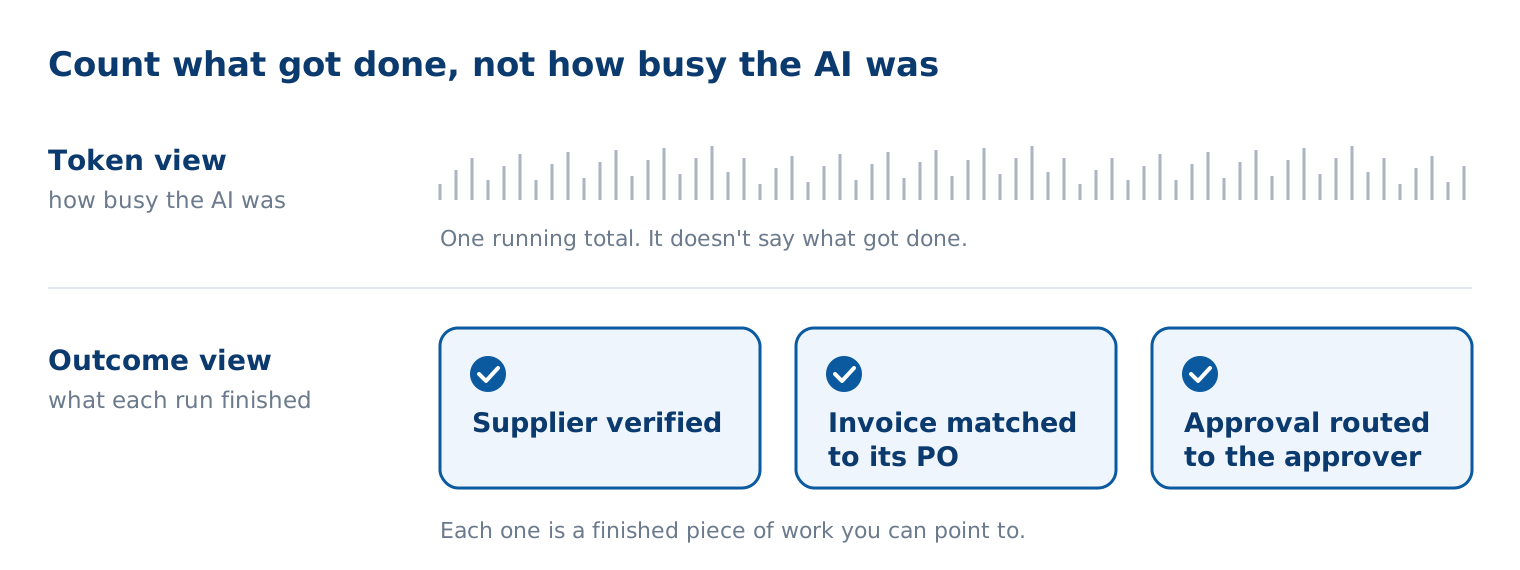
Counting outcomes changes the conversation. Instead of reporting how many tokens were used, you can see what each run delivered, step by step, and what it took to get there.
It also puts wasted effort in plain sight. A run that loops without finishing has nothing to show for it, and that gap is visible instead of buried in a bigger bill.
Predictable work, predictable cost
A predictable bill starts with predictable work. Three things make the difference:
- Fixed steps. The process is written down as a Playbook: which steps happen, in what order, and where a person has to approve. The agent doesn't invent the path.
- Fixed models. Each agent is locked to the model it was tested on. Any change is evaluated again before it goes live.
- Everything on the record. Every run is recorded on the Execution Ledger: who acted, what changed and which Playbook version applied.
When the steps and the models are fixed, a run stops being a surprise. You know what a process costs before you scale it, and you can see what it delivered after.

Three questions to ask any AI vendor
- What does one run of this process cost, and how much does that vary from run to run?
- What did each run deliver, in terms my team would recognize?
- What happens when the underlying model changes?
If the answers are vague, the bill will be too.
What each dollar delivered
The companies that keep investing in AI will be the ones that can show what each dollar delivered.
That's the standard we hold ourselves to at VeroTX: fixed steps, fixed models, and every outcome on the record.
For the longer version, read Tired of Token Roulette?, see how VeroTX pricing works, or talk to our team.
Source: Harness, State of AI in FinOps 2026.
This piece first appeared on LinkedIn.
See How Procurement Eliminates Procurement Margin Leakage
Explore our execution layer for Procure-to-Pay, from intake to payment, every handoff is automated.
Explore Procurement Automation